When does your company need a fractional CTO?
Distinguish a leadership gap from a delivery-capacity gap, compare advisory and full-time options, and prepare a first-month review with clear outputs.
 Written byMohamed Alkhaldi
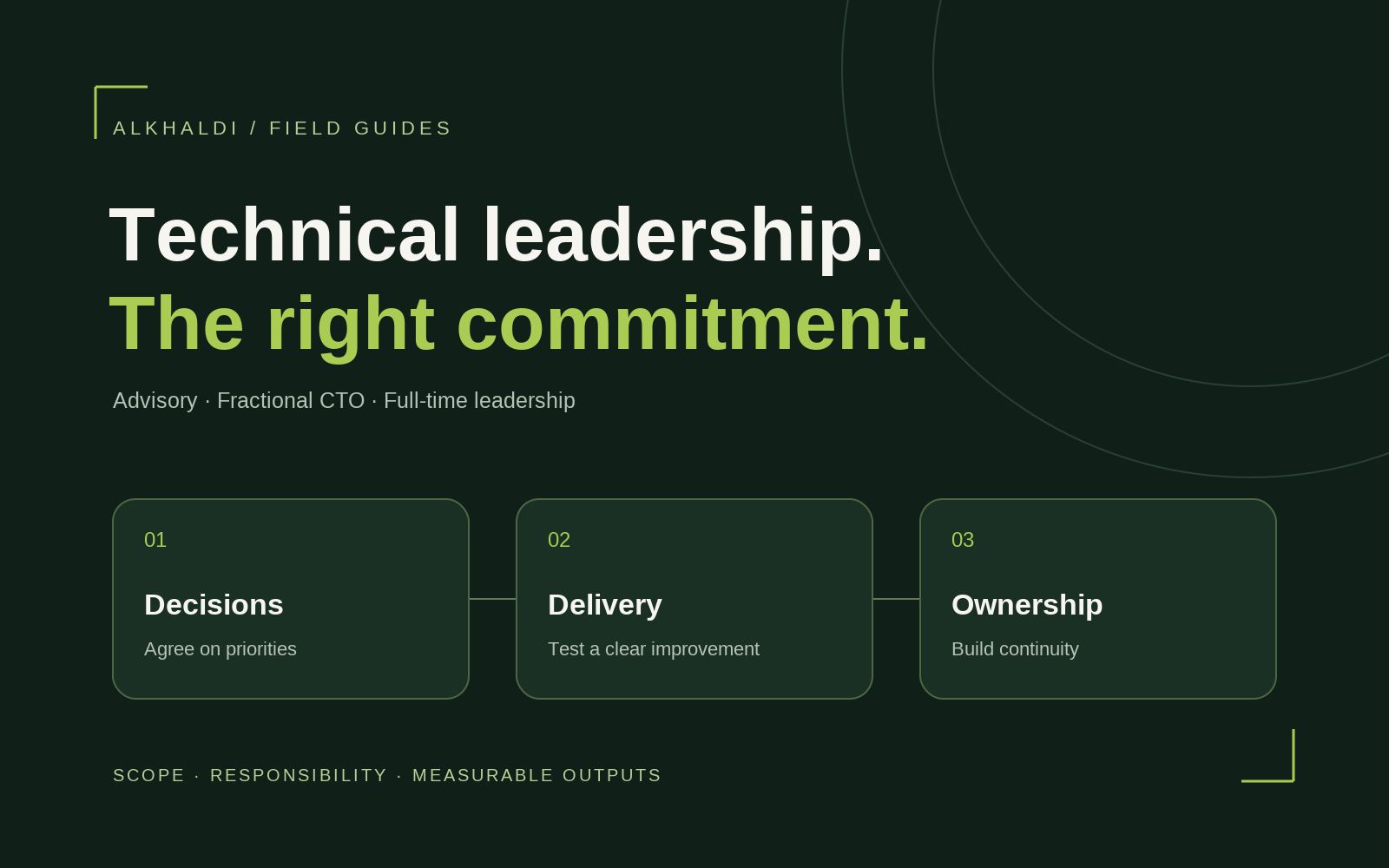
When a product launch slips, another developer is not always the first answer. The constraint might be delivery capacity, constantly changing priorities, or the absence of someone who connects technical decisions with business needs. Choosing a fractional CTO starts with identifying which problem you actually need to solve.
A fractional CTO takes responsibility for an agreed scope of technical leadership within a defined time commitment. The title does not imply continuous availability or replace an implementation team. Decision rights, outputs and working communication matter more than the title or meeting count.
Do you need a decision or more delivery capacity?
Review the last three tasks that stalled. Record the blockage, the decision owner and what would have moved the work forward. If scope, review and deployment are clear but the team lacks time, another developer or a smaller release might help. If work repeatedly stops at technical choices, prioritisation or acceptance, investigate the leadership gap.
Hypothetical example: a subscription-platform team postpones launch for a third redesign of customer permissions. If nobody has settled account boundaries, user roles and first-release scope, faster coding will not settle those questions. Start with a documented scope and acceptance decision, then allocate implementation work.
Compare three forms of support
A focused technical advisory engagement
This suits a bounded question: should we improve the existing application or rebuild it? Is an integration design suitable? Expect a review with explained alternatives. Your team retains day-to-day delivery ownership. Start with technical consulting when one decision needs an independent assessment.
A fractional CTO
This can suit recurring decisions and guidance when an internal or contracted team can implement the work, and leadership can operate within an agreed schedule. Possible responsibilities include roadmap priorities, architectural review, delivery practices and hiring assessment. Specify what the person implements versus reviews, and who handles incidents outside their availability.
A full-time CTO
Full-time leadership may fit continuous coordination across teams and operational responsibility that cannot fit a limited schedule. Headcount alone is not the decision: consider decision volume, dependencies and required availability. Developing an internal leader with temporary guidance can also be preferable to permanent reliance on an external advisor.
Agree on responsibilities before starting
- Outcome: name the problem, such as slow release approval or unclear MVP scope.
- Authority: identify who approves architecture, budget and priorities, and resolves disagreements.
- Availability: define working time, communication channels, agreed response expectations and incident ownership.
- Deliverables: require decision records, a risk register, an action plan and progress reviews with decision-makers.
- Continuity: keep code, accounts and documentation under company ownership, with absence cover and a knowledge handover.
Avoid shared passwords for convenience. Use individual accounts with task-appropriate permissions, and begin with a test environment and anonymised data where possible. A production change needs an accountable approver and a rollback plan; an initial review is not permission to modify customer systems immediately.
A proposed first-month review
Adapt this discussion plan to system complexity and team availability. It is not a promise to resolve every problem in a month.
- Understand the current state. Meet the product owner and team; review a core user journey, system map and deployment process. Output: a shared problem statement that separates known facts from questions needing verification.
- Choose the priority. Review a sample of releases, incidents and deferred decisions. Output: a prioritised risk record and one decision to address, with an accountable owner.
- Test a bounded improvement. For example, reduce release scope or define acceptance conditions. Output: a testable change, a rollback plan and a before-and-after measure.
- Review the result. Document what improved, what did not and why. Output: the next-stage plan, required leadership and implementation capacity, and a decision to continue or change the engagement.
An actionable acceptance condition might be: “Support can create a customer with a defined role in staging; access to another account's data is rejected; release rollback steps are documented.” This gives a reviewer more to work with than “improve quality”.
Measure the value of technical leadership
Establish a baseline from your application instead of comparing developers by lines of code. DORA's delivery metrics examine throughput and instability, including change lead time and the proportion of deployments needing urgent intervention. Apply them in the application's context to improve the team over time, rather than ranking individuals or promising a percentage improvement.
Add a measure tied to your specific constraint: decision waiting time, tasks started without acceptance conditions, or a successful recovery exercise. Record workload and scope as well. Fewer defects after stopping releases is not enough evidence of better delivery. If the underlying issue is the sales or service journey, diagnose operational priorities before changing the technical organisation.
Questions for candidates and proposals
Ask how the candidate will understand the system before recommending a rebuild. Request a shareable example of a decision with its alternatives and risks, how they handle disagreement, what they hand over, and who covers incidents when they are unavailable. Establish their actual role in examples instead of relying on client names or a list of tools.
Compare proposals by time commitment, responsibility, review outputs, included implementation and availability. There is no universal fee that fits every company: a monthly architecture review differs from managing a team and weekly releases. Request a written scope and explicit assumptions before agreeing on pricing.
Prepare a description of your product and team, the most important stalled decision, the deployment process and decision-maker availability. Discuss CTO and technical leadership support to determine whether you need ongoing fractional leadership, a bounded review or an internal leadership hire.
Share your goals and the current stage of your project so we can define the next step.
CTO and full-stack engineer building products since 2016, with seven years in digital marketing. Works across SaaS, ERP, AI integration and technical SEO; has mentored more than 50 developers.
Keep reading
 Choosing a tech stack: a practical guide before development
Start with workflows, team skills and integrations, then test the riskiest assumptions before choosing a tech stack for your platform or business system.
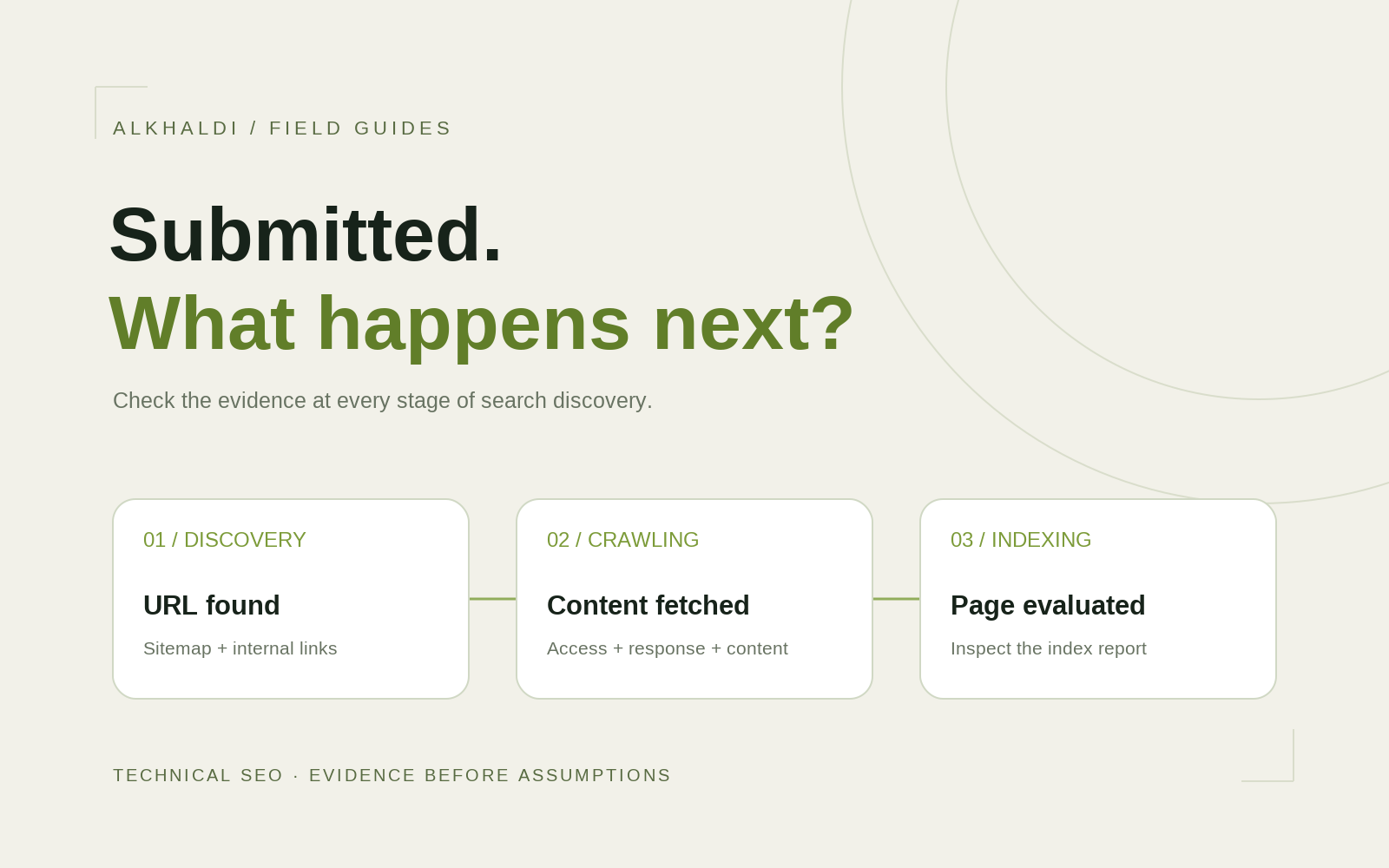 Sitemap submitted but pages not indexed: what to check
Separate submission, sitemap processing, crawling and indexing. A practical diagnostic sequence with an observed example from this website.
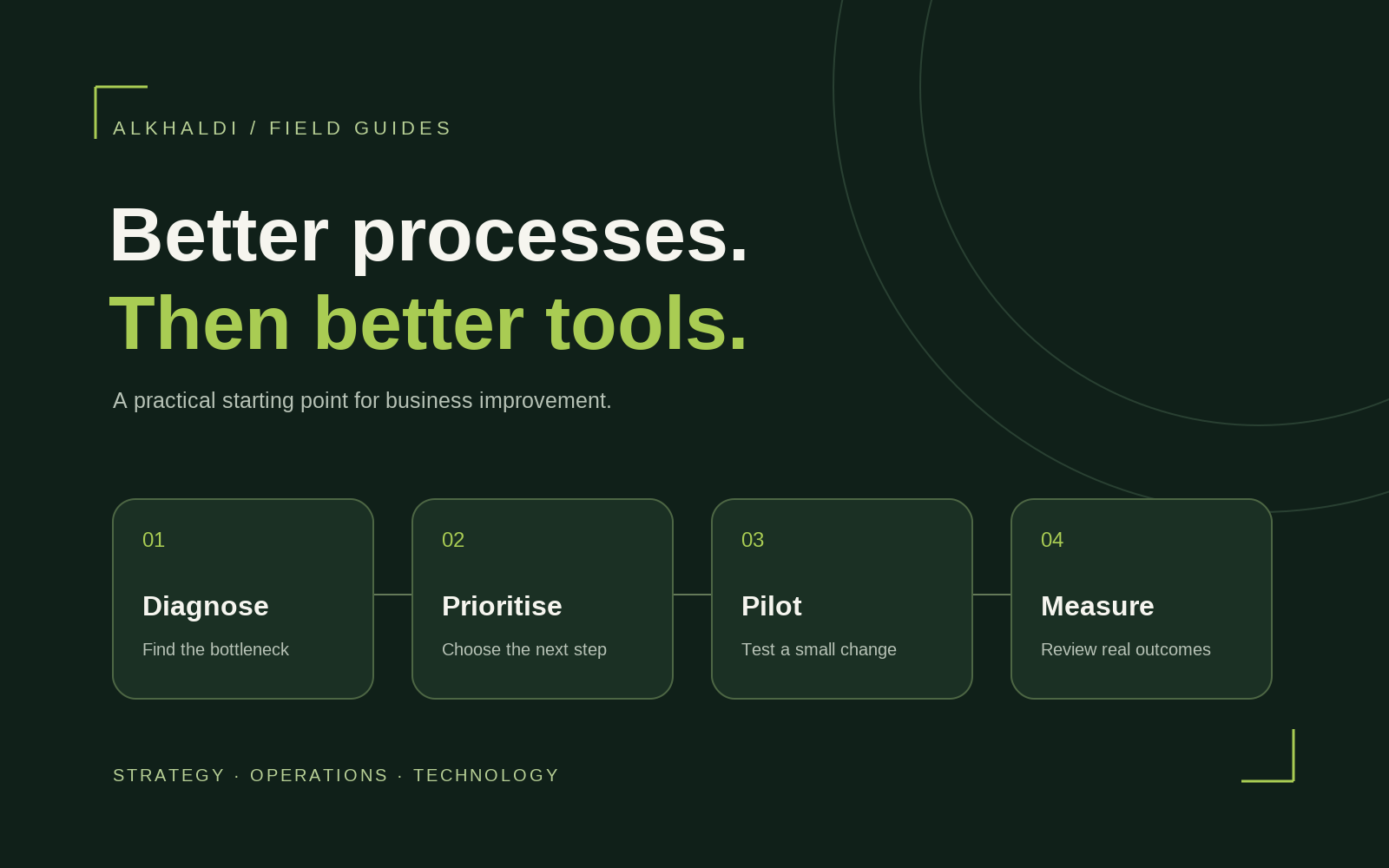 Business improvement: what to fix before buying software
Map an enquiry from arrival to delivery, identify the bottleneck, and choose a small measurable improvement before committing to new software.